


Blog
Stay up-to-date with the latest developments, hottest news, and all the exciting content at your fingertips.
Company News

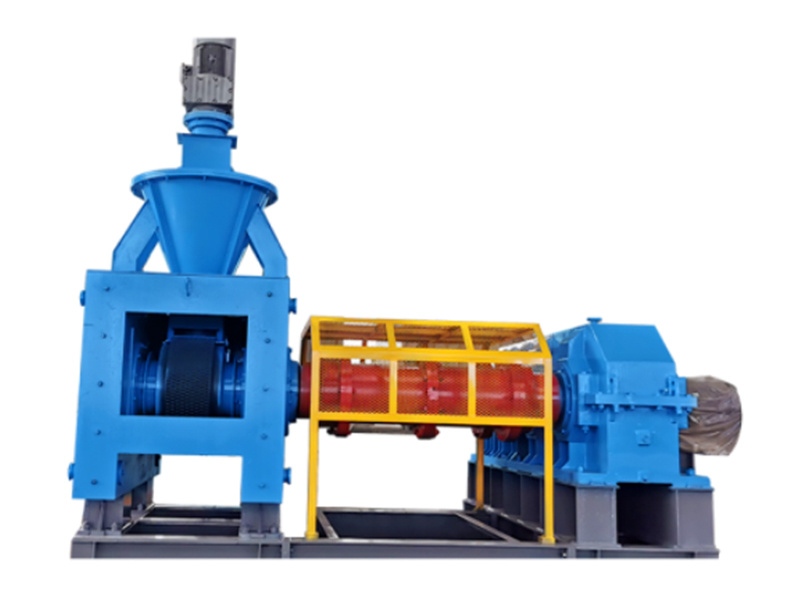
Introduction to the Lime Powder Ball Press Machine
2021-07-16
A lime powder balling machine is a device used to compress powdered materials into spherical shapes, with applications spanning a wide range of industries. Primarily, it’s employed to agglomerate, granulate, or form balls from lime powder—aiming to reduce dust emissions, control bulk density, enable material reuse, and enhance transportation efficiency. Historically, in China’s metallurgical industry, lime powder was often discarded or repurposed for other uses, leading to significant resource wastage. However, as concerns over dwindling resources and energy shortages have grown, the efficient utilization of lime powder has increasingly become a priority. Since 2002, research institutions within the metallurgical sector have conducted extensive scientific studies, successfully addressing this challenge by developing high-pressure lime powder balling machines.
See more →
Introduction to the Magnesium Oxide Powder Ball Press Machine
2021-07-13
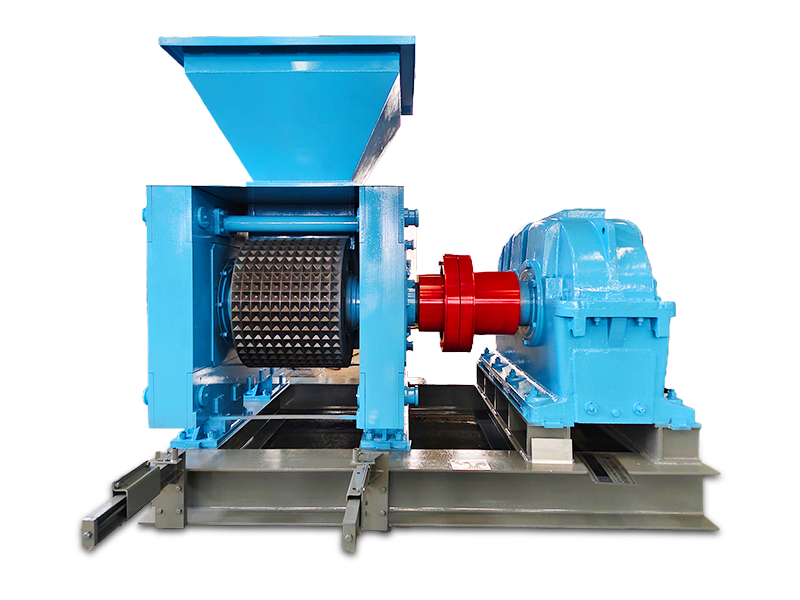
The magnesia powder ball press machine primarily consists of several key components: the transmission system, main frame, reducer, belt conveyor, pre-compression unit, roller sleeve alignment mechanism for the ball grooves, hydraulic system, and electrical control system. During operation, magnesia powder is fed定量 and uniformly into the pre-compression unit of the press machine, ensuring a stable material level inside. The pre-compression screw within the unit then forcefully pushes the powder into the gap between the counter-rotating rollers, pre-compressing the material before it’s conveyed into the arc-shaped grooves of the two rollers. Each roller surface is evenly equipped with identical roller cavities. Through meshing and synchronized, reverse rotation driven by the rollers, the incoming magnesia powder is gripped into the grooves and further compressed as the rollers continue to turn. Under the combined influence of elasticity and gravity, the compressed powder eventually detaches from the rollers, forming uniform balls. Meanwhile, the continuous rotation of the electric motor drives the rollers in a cyclical pressing and shaping motion, enabling efficient, mass production.
See more →
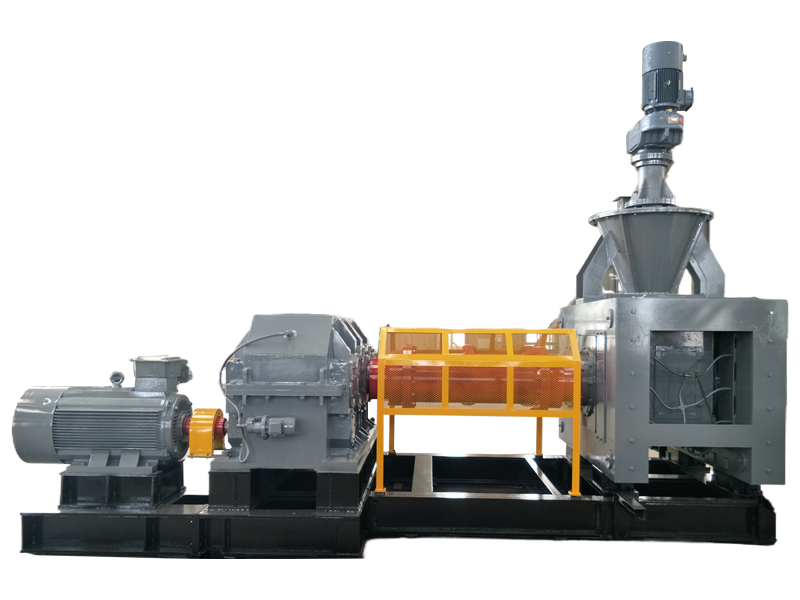
Structure, Principles, and Installation Considerations for Dry Powder Briquetting Machines
2021-07-10
The dry powder ball press machine is a versatile piece of equipment designed to compress various powders, granules, waste materials, and residues—including coal powder, iron powder, coking coal, aluminum powder, iron filings, iron oxide scale, carbon powder, charcoal powder, slag, gypsum, tailings, sludge, kaolin, activated carbon, and coke fines. Widely used across industries such as refractory materials, power plants, metallurgy, chemical processing, energy production, transportation, and heating systems, the material formed after being processed by the ball press machine is both energy-efficient and environmentally friendly, making it easier to transport. This not only enhances the utilization of waste materials but also delivers significant economic and social benefits.
See more →
How a ball press machine works and its applications
2021-07-10
The ball press machine is primarily used to compress powdery materials that are difficult to shape. It features high forming pressure, adjustable main motor speed, and is equipped with a screw feeding system. Commonly referred to as a "powerful ball press," "mineral powder ball press," or "double-roll ball press," this equipment is widely employed in the production of spherical pellets from both non-ferrous and ferrous metal ores—materials that can then be directly fed into furnaces for smelting, thereby enhancing their added value. In fact, any metallurgical industry waste or auxiliary material requiring furnace processing must first be processed using a ball press machine. Examples include dust collection ash, slag mud, oxide scale, steel slag, iron concentrate powder, aluminum dross, and silico-manganese ore powder—making it an efficient and environmentally friendly solution. The ball press machine operates on the following principle: the main motor drives power through a V-belt to a reducer unit.
See more →
Key factors for improving the quality of dry powder balling machines
2021-07-03
Behind every high-quality briquetting machine lies an extraordinary level of dedication and hard work that most people can hardly imagine. Zhengzhou Hongxin Mining Equipment Co., Ltd. is a professional manufacturer of briquetting machines, boldly committed to pushing boundaries in this field. We relentlessly pursue top-notch quality in our machines, guided by our core principle: treating everyone with integrity and winning hearts—and minds—through unmatched quality. To achieve such excellence, our briquetting equipment not only relies on superior materials but also benefits from cutting-edge technology. Today, we’ll focus specifically on dry powder briquetting machines, explaining the key factors that ensure their exceptional performance and reliability. First and foremost, these machines are incredibly versatile, capable of efficiently compressing a wide range of powdered materials—including coal dust, mineral powders, lime powder, fluorite powder, and more—into uniform, high-quality briquettes.
See more →
Knowledge on troubleshooting faults during the operation of mineral powder balling machines
2021-06-28
The mineral powder ball press machine is a derivative piece of equipment within our metallurgical machinery industry. Due to its widespread application in the metallurgy sector, it enjoys relatively broad usage across the industry. Primarily, this equipment is designed to compress powdered materials into uniform, shaped pellets. Its development, however, remains closely tied to the growth of the metallurgical industry—after all, only when the metallurgical sector itself reaches new heights of prosperity can the potential of our ball press machines truly shine. When operating, mineral powder ball presses are often influenced by other components of the equipment. This is mainly because interactions with parts directly involved in material compression can negatively affect the shape and quality of the resulting spherical pellets.
See more →
2021-06-25
The pellet press is primarily an equipment used to compress materials that are difficult to shape, and it finds extensive applications in industries such as refractory materials, power plants, metallurgy, and chemical processing. By enhancing the utilization of waste materials, the pellet press produces products that are energy-efficient, environmentally friendly, and easy to transport. However, not all materials can be processed effectively—there are specific requirements regarding both the materials themselves and their optimal mixing ratios. So, what key considerations should be taken into account when determining the material mix for a pellet press? And what are the specific requirements for the materials being compressed? First, here are the essential points to consider when adjusting the material ratios for the pellet press: 1. **Control the moisture content of the material:** The moisture level of the material directly affects the shaping process. If the moisture content is too low,
See more →
Several Factors Affecting the Ball-Forming Rate of the Pelletizer
2021-06-22
Users often encounter low ball-forming rates during the operation of pelletizing machines. The ball-forming rate is a key indicator for assessing the quality of a pelletizer, and the machine's inherent condition is one of the primary factors affecting this rate. Aside from equipment-related issues, the following factors can also contribute to poor ball-forming performance: 1. Ensuring uniform material feeding. Some pelletizing lines are initially designed without properly addressing the challenge of consistent feed distribution, relying solely on belt conveyors to regulate the flow. While operators who are familiar with the equipment and ensure stable, coordinated operation can still produce合格的 pellets, in most cases…
See more →
Overview and Review of Basic Types and Production Processes for Roller Covers in Ball Press Machines
2021-06-17
The roller shell is the core component of a briquetting machine. The quality of the roller shell directly determines the service life of the machine. Among all factors, hardness is the most critical parameter for evaluating the quality of the roller shell—this hardness depends on the specific alloy steel grade used and the precision of the final heat-treatment process. The production process for the roller shell begins with creating a rough blank based on the shell’s blueprint, followed by turning operations to ensure a perfectly smooth, polished surface on all four sides and eight edges. Next, spherical recesses are precisely carved into the circumference of the roller shell—of course, the size and shape of these recesses are carefully determined by multiple factors, including the diameter of the roller shell and the type of material being processed. Finally, the shell undergoes heat treatment, which is the crucial step that completes the manufacturing process.
See more →
What factors affect the ball-forming quality of the pelletizer?
2021-06-15
Efficient operation not only ensures the rapid completion of production tasks but also guarantees product quality—especially when it comes to the quality of finished balls produced by the ball press machine. Therefore, it’s crucial to minimize and eliminate any factors that could negatively impact the pressing process. So, what exactly affects the quality of the finished balls produced by the ball press machine? 1. When the customer specifies ball pits that are too small, combined with an excessively fast feeding rate, the production speed ends up slower than the rate at which material is fed into the machine. This imbalance easily leads to blockages. 2. If the material’s moisture content is too high, its increased stickiness can significantly raise the risk of clogging in the ball press machine. 3. When the raw materials contain unusually large particles, these larger chunks may fail to pass through the pressing mechanism, further contributing to potential blockages.
See more →We provide professional briquetting machine equipment and competitive quotes.
We will contact you within 24 hours of receiving your message.
Tel:+86-13703990669
Tel:+86-18182214485
Email:sales@hongxinmining.com
Address: Longgang Development Zone, Xingyang City, Zhengzhou City, Henan Province


Email:zzhxjixie@126.com
Tel:+86-13703990669
Tel:+86-371-64696918
Address: Longgang Development Zone, Xingyang City, Zhengzhou City, Henan Province
Leave a Message
The need for specialized plant growth regulators