
Blog
Stay up-to-date with the latest developments, hottest news, and all the exciting content at your fingertips.


What factors limit the ball-forming pressure of a pelletizing machine?
Time:Apr 27,2021
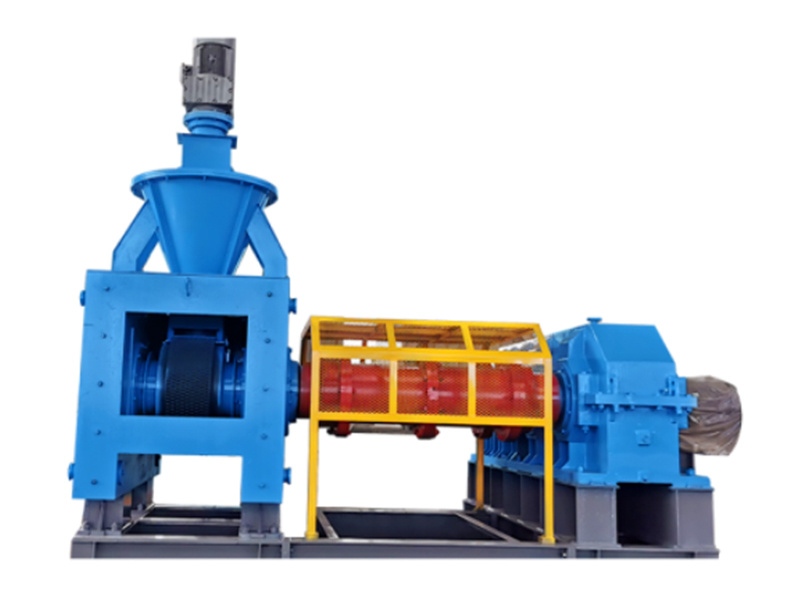
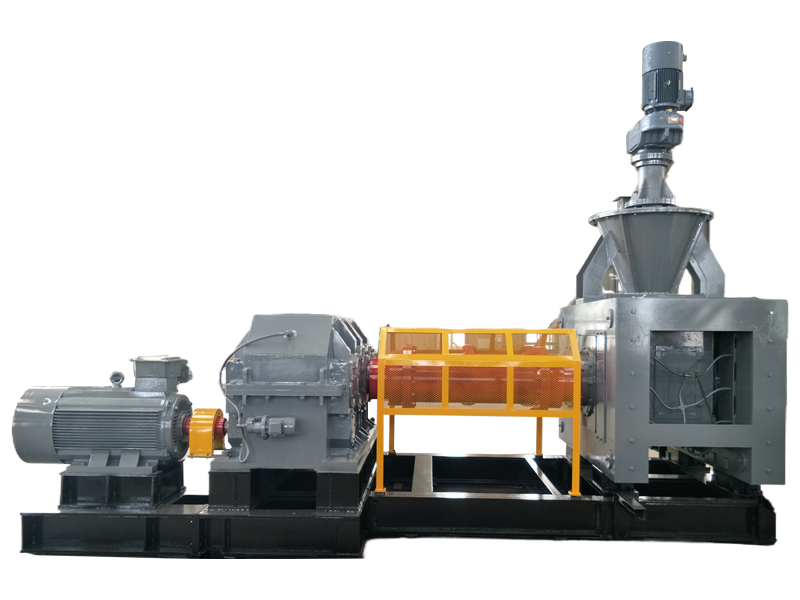
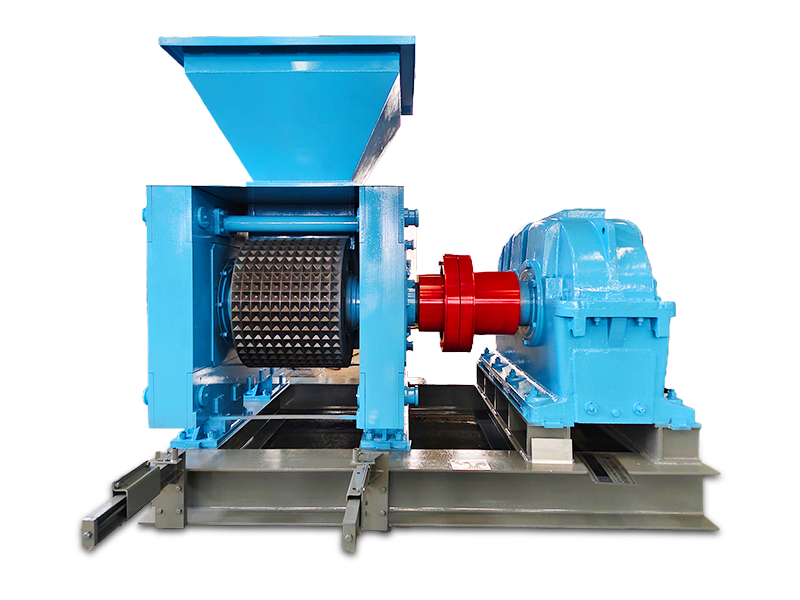
Among its components, the passive roller is pressed against by the piston of a hydraulic cylinder (in constant-pressure systems, it’s held in place by an inclined wedge). System pressure is maintained by the hydraulic circuit, along with hydraulic control valves and an accumulator. Material flows uniformly from the storage bin, via a metering device, into the hopper of the forming machine. From there, it steadily feeds into the gap between the counter-rotating rollers. As the rollers rotate at equal speeds but in opposite directions, they gradually increase the unit compression pressure applied to the material—starting low and rising progressively. At the central line of the rollers, a regulating gate fine-tunes the process, ensuring even pressure distribution across the material. The main structure of the ball press includes: the primary motor, which drives power through a V-belt to a speed-reducing gearbox. The gearbox, in turn, transmits motion via a coupling directly to the drive shaft. Finally, a pair of open gears synchronizes the rotation of the two roller shafts, ensuring they operate in perfect unison. Once the material passes this critical point, the forming pressure rapidly decreases, allowing the compressed material to transition smoothly into the "deballing" phase—facilitating effortless ejection of the formed balls.
Tradition Baling Machine It relies on clay or fired clay as a binder—without it, you simply can’t roll the mixture into balls. Clay itself isn’t combustible, but when mixed into coal briquettes, it must be heated to the same temperature as the coal through the burning of the coal itself. In other words, while clay doesn’t produce heat, it still ends up wasting some of the coal’s thermal energy, thereby reducing the overall efficiency of coal utilization. It’s not that no smoke is produced at all; rather, the combustible components in coal—including primarily carbon—release carbon dioxide when burned. This CO₂ escapes directly from the stove, but if there’s too much buildup indoors, people may start feeling suffocated. And if ventilation inside the stove remains poor, carbon monoxide could even form, potentially leading to deadly carbon monoxide poisoning. That’s why, during winter, Beijing residents who fire up their stoves always make sure to leave a small window slightly open—or install a specially designed vent on the window—to ensure proper air circulation. Yet despite these precautions, unfortunately, accidents involving accidental carbon monoxide poisoning still occur every year.
We provide professional briquetting machine equipment and competitive quotes.
We will contact you within 24 hours of receiving your message.
Tel:+86-13703990669
Tel:+86-18182214485
Email:sales@hongxinmining.com
Address: Longgang Development Zone, Xingyang City, Zhengzhou City, Henan Province


Email:zzhxjixie@126.com
Tel:+86-13703990669
Tel:+86-371-64696918
Address: Longgang Development Zone, Xingyang City, Zhengzhou City, Henan Province
Leave a Message
The need for specialized plant growth regulators