
Blog
Stay up-to-date with the latest developments, hottest news, and all the exciting content at your fingertips.


language
Applications of the Dry Powder Briquetting Machine | Batching Machine Operation Video
Time:Jul 07,2020
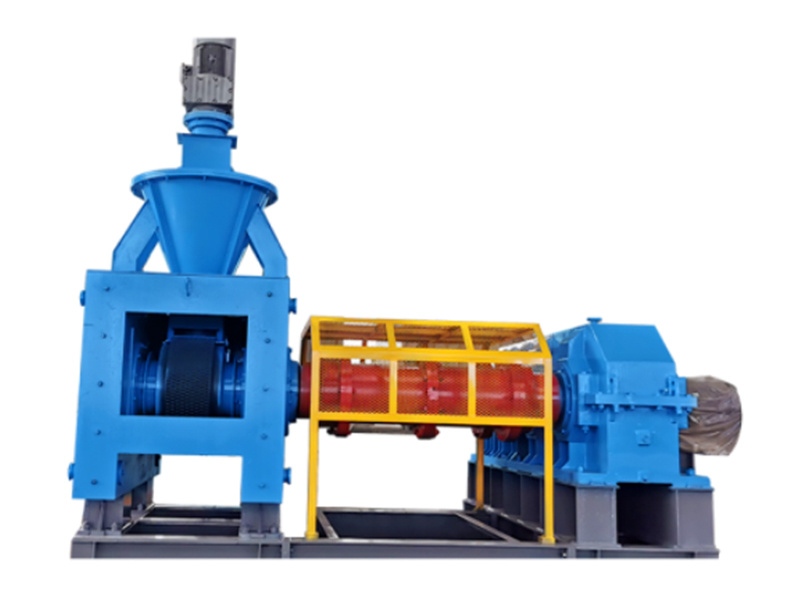
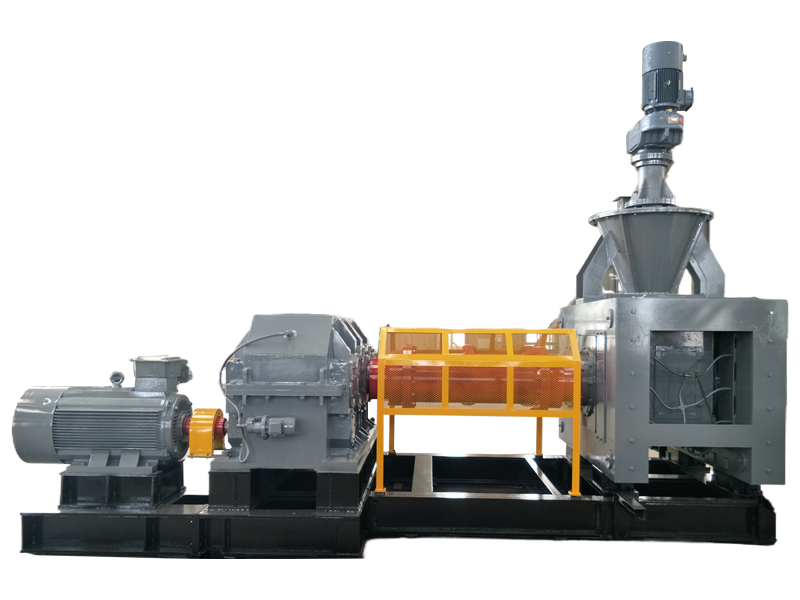
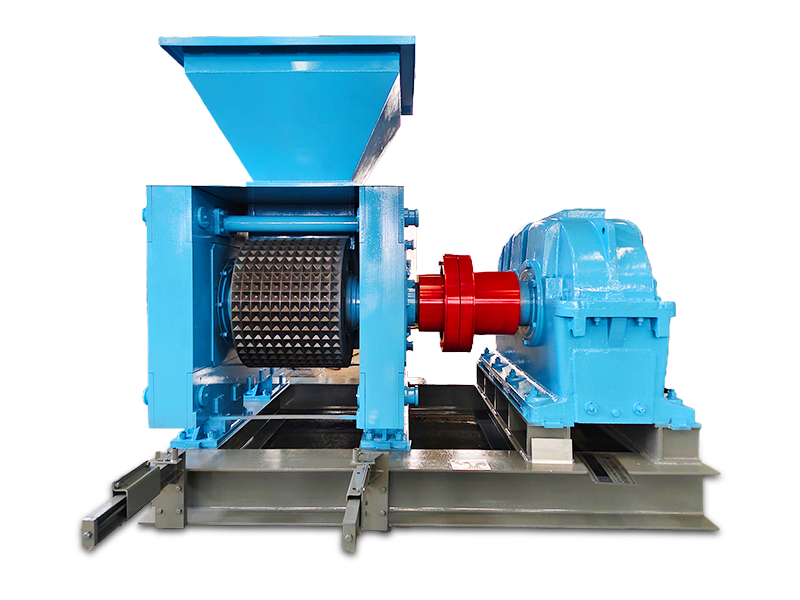
Applications of the dry powder ball press machine
A dry powder ball press is a device used to compress powdered materials into spherical shapes. It has a wide range of applications, capable of compacting, granulating, or forming balls from materials such as lime powder, calcium carbide powder, bauxite, and more. The primary goals are to reduce dust emissions, control material volume, enable recycling, and enhance transportation efficiency.

Requirements for materials
Material particle size can range from 80 to 200 mesh.
Hard metallic objects are not allowed in the material. Otherwise, they will damage the surface of the roller cover.
The material supply must be adequate; it is recommended to use a variable-speed screw feeder, allowing you to monitor the return material flow and adjust the fresh material feed accordingly.
Working Principle of the Dry Powder Briquetting Machine
The pre-compressed material fed through the balling nozzle is forcibly pressed into the gap between the counter-rotating rollers. As the rollers rotate at equal speeds but in opposite directions, they compress the material, causing the unit forming pressure within it to gradually increase—reaching its peak precisely along the line connecting the centers of the two rollers. Once the material passes this critical point, the unit forming pressure begins to decrease steadily, eventually leading the material into the ball-release phase until complete detachment occurs.
If the rotational speeds of both the main machine and the pre-compression unit are properly adjusted, the machine can achieve one-time shaping. However, when returning screened-out fines for re-mixing with fresh material before re-pressing, care should be taken to ensure that the returned material doesn’t contain excessively large clumps. If the returned material happens to include overly bulky chunks or if the ratio of recycled material exceeds 50%, it’s advisable to reduce the rotational speed of the pre-compression screw. Failure to do so could easily cause the motor to overload.

Brief Overview of the Dry Powder Briquetting Machine Structure
The entire unit can be divided into four main sections: the pre-compression section, the main machine section, the screening section, and the hydraulic station section.
The pre-compression machine section: The pre-compressor is driven by an electromagnetic speed-regulating motor, which transmits power via belt pulleys and a turbine reducer. Under the forced action of the spiral shaft, the raw material is fed into the die nozzle, supplying material to the main machine. Thanks to the constant-torque characteristics of the electromagnetic speed-regulating motor, when the amount of material compressed by the pre-compression screw matches the feed requirement of the main machine, a stable feeding pressure is maintained, ensuring consistent briquette quality. However, if the compression volume exceeds the required level, the motor of the pre-compressor will overload; conversely, if the feed rate is too low, the material won’t form proper briquettes. Therefore, mastering the operational techniques is crucial for maintaining optimal performance of the briquetting machine.
The main unit is driven by an electric motor, which transmits power via a belt pulley and a cylindrical gear reducer to the main drive shaft roller. Synchronization between the two pairs of rollers is ensured by a pair of open gears, while the passive roller shafts are designed to slide freely, enhancing the safety of the entire system.
The screening machine section features a standard single-slot, double-layer vibrating screen. This screen is driven by a vibration motor, which not only shakes the material for efficient separation but also simultaneously conveys it out of the machine. The unit can be customized and modified based on the configuration of the customer’s existing equipment—for instance, by integrating a small belt conveyor that extends beyond the machine and connects seamlessly with the customer’s designed and installed vibrating screen. Alternatively, the original vibrating screen unit can be lengthened to better meet specific site requirements.
The hydraulic station section: This series of pellet presses currently uses an electric oil pump, which is integrated with the oil tank, pressure gauge, and all necessary valves. Simply connect the oil outlet hose to the oil inlet pipe on the main unit's cylinder.
When in use, adjust the pellet press hardness to the desired pressure setting, then turn off the electric oil pump. To relieve pressure during unloading, simply rotate the unloading valve handle, allowing the pump to release its load.
The pump operates primarily by rotating an electric motor-driven pump, which draws hydraulic oil through an inlet valve and then discharges it via an outlet valve. The oil is directed into the cylinder via the hydraulic circuit, providing a steady total pressure to the compression rollers. When the feed rate becomes too high, the center distance between the two roller pairs increases, causing the silver ear-shaped piston to experience reverse compression—thus raising the system pressure.
In this series of pellet presses, an accumulator in the hydraulic system helps maintain stable operating pressure. Additionally, if requested by the user, a pressure relay (at additional cost) can be installed to automatically cut off or reconnect the power supply in response to changes in the pump’s working pressure, ensuring that the system pressure remains consistently maintained at a set level—ultimately helping to conserve energy.
We provide professional briquetting machine equipment and competitive quotes.
We will contact you within 24 hours of receiving your message.
Tel:+86-13703990669
Tel:+86-18182214485
Email:sales@hongxinmining.com
Address: Longgang Development Zone, Xingyang City, Zhengzhou City, Henan Province


Email:zzhxjixie@126.com
Tel:+86-13703990669
Tel:+86-371-64696918
Address: Longgang Development Zone, Xingyang City, Zhengzhou City, Henan Province
Leave a Message
The need for specialized plant growth regulators