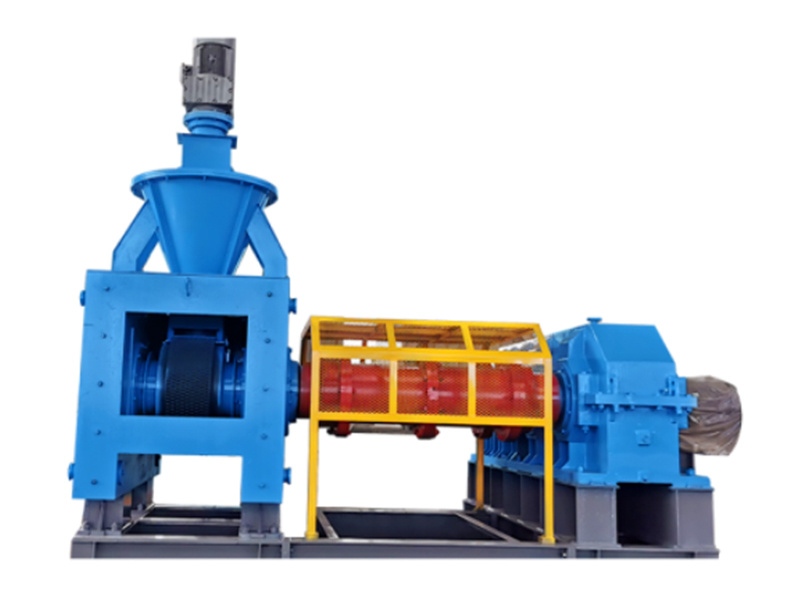
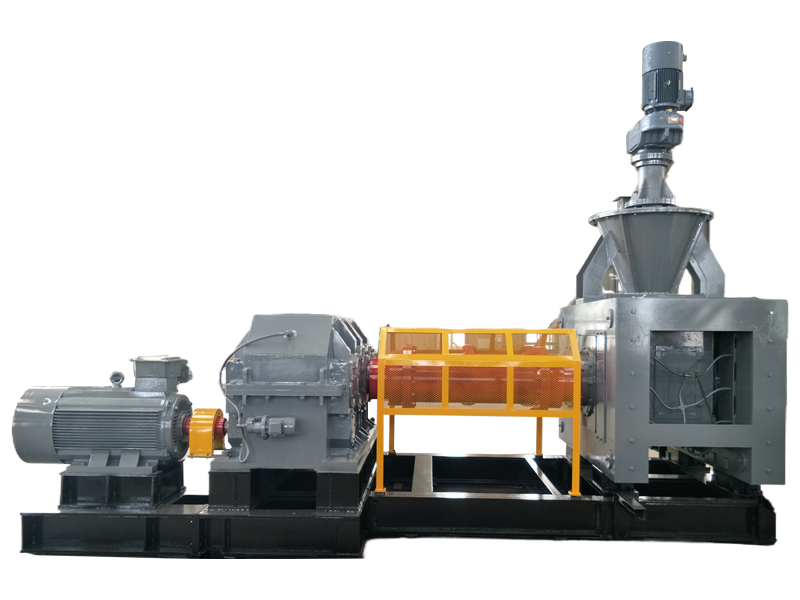
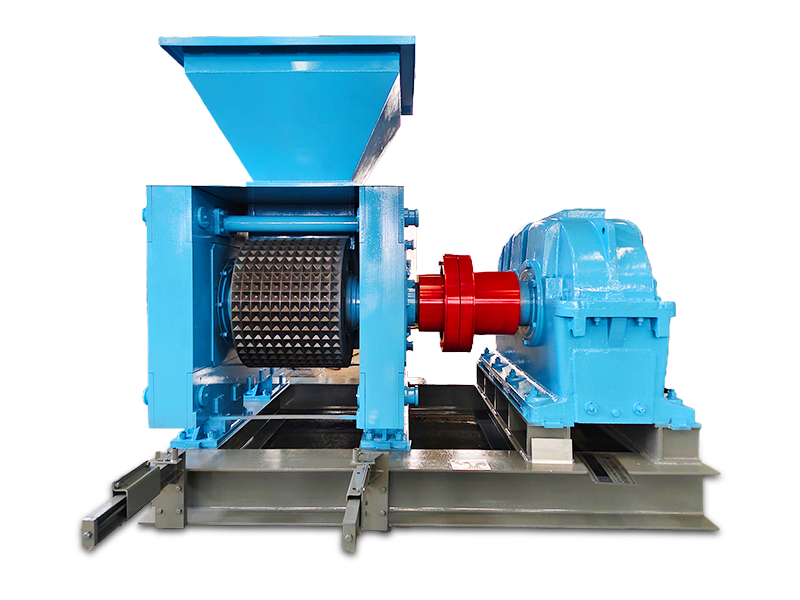
When it comes to powdered materials, most people are familiar with them—these materials are widely used industrial products that find applications across a variety of industries. As the key equipment for shaping powdered materials, the dry powder ball press plays a crucial role in this process. The finished pellets produced by this machine exhibit exceptional hardness, making them highly resistant to breakage during handling and unloading. This makes the dry powder ball press the preferred choice for forming spherical pellets from powdered materials. Moreover, the machine is versatile, capable of processing a wide range of powders into high-quality, uniformly shaped pellets with consistent output and impressive forming pressure.

Advantages of a dry powder ball press machine:
1. The dry powder balling machine boasts exceptional adaptability, capable of processing a wide variety of powdered materials into uniform spheres.
2. The press rollers of the balling machine are manufactured using a hot-fitting process, and the bearings are equipped with double-row roller bearings, ensuring they can withstand high-pressure operating conditions.
3. A matching frequency converter-controlled distribution cabinet allows for even more precise regulation of the machine’s rotational speed.
4. At the heart of the balling machine lies the advanced pre-compression forced feeding system, which not only provides a steady, forceful supply of material to the two press rollers but also efficiently removes air trapped within the material during the pre-compression stage. This ensures optimal material compaction, significantly enhancing the strength and density of the formed pellets. Additionally, the system incorporates a variable-frequency motor, enabling seamless adjustment of the pre-compression screw’s rotation speed—and consequently, the feed rate—further boosting the overall balling efficiency, which can now reach over 90%.

What's the difference between single-output and double-output gearboxes in dry powder ball press machines?
The single-output ball press machine's main unit: The main unit is driven by an electric motor, which transmits power via a belt pulley and a ZS-series cylindrical gear reducer, ultimately transferring motion through a pin-type coupling to the main drive shaft and rollers. Synchronization between the two roller pairs is ensured by a pair of open gears.
The ZSY hard-toothed double-output reducer employs a gear-grinding process, integrating the two open-type roller gears of the main unit directly into the reducer housing. This design enhances gear sealing and simplifies lubrication, making it ideal for harsh operating environments.
Additionally, this reducer boasts several key advantages: excellent synchronization, smooth transmission, high transmission efficiency, superior precision, robust load-bearing capacity, exceptional energy efficiency, strong reliability, and remarkably low noise levels. Moreover, critical parameters such as center distance and nominal transmission ratio have all been meticulously optimized, while major components exhibit excellent interchangeability.
These advanced features not only boost the ball-pressing strength and efficiency during the ball-forming process in ball press machines but also ensure that this type of reducer outlasts conventional models, offering significantly longer service life. All internal gears are crafted from high-quality materials—20CrMnMo or 20CrNi2Mo—and undergo heat treatment to achieve a hardness rating of HRC58-60.
That concludes our answers regarding the dry powder ball press machine—we hope this information was helpful to you! Zhengzhou Hongxin looks forward to collaborating with you. For more insights into dry powder ball press machines, feel free to call: 13703990669 (also available on WeChat)!